
Aponogeton distachyos – also known as Cape Pondweed, but most commonly as waterblommetjies – is endemic to the Western and Eastern Cape regions of South Africa. Waterblommetjie bredie is a traditional stew made with lamb which has a quite unique flavour, and Cape chefs get to find bags of the flowers in the vegetable section of their supermarkets at this time of year.
In addition to being low maintenance, these deciduous deep-water aquatic plants have the added benefit of starting to grow as the waterlilies die down, coming into full bloom in winter and early spring with their unmistakably inflorescence.
Pulling out the long, deep stems disrupts the aquatic ecosystem, so in support of conservation, consider growing them in your own pond or dam rather than harvesting from streams, rivers and dams. A few caveats though. They must be planted deep and full sun – and you will need at least 1 kg to make the stew!
Thanks to pondandgardenplants.co.za for the interesting details. The website also offers a recipe for waterblommetjie bredie if you want to give it a go and don’t have a recipe handed down from your ouma.
IN THE GARDEN
In September last year we wrote about laying chicken wire mesh over our small patch of front garden lawn to try to protect it from the rambunctious dogs. Well, it worked fine until winter came along and all the Kikuyu lawn in the mix died down. The chicken wire was exposed and Danny and Zara had a wonderful time excavating again. So, we dug up all the lawn, Lebo constructed a “Don’t-Even-Think-About-It” fence, and we have laid new LM instant lawn. Once it is established, we will repeat the chicken wire mesh exercise and hope for the best!
Other than that, we are once again moving into that wonderful time of year when our world comes alive with budding plants, and breeding frogs, birds and insects. What a joy.

Here we go again!
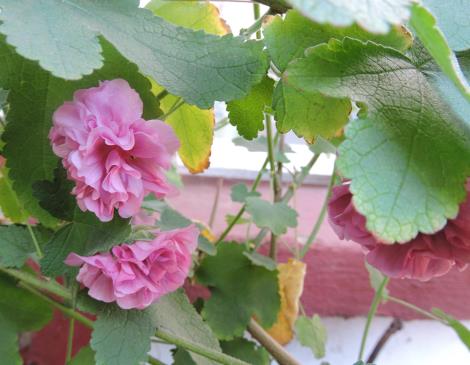
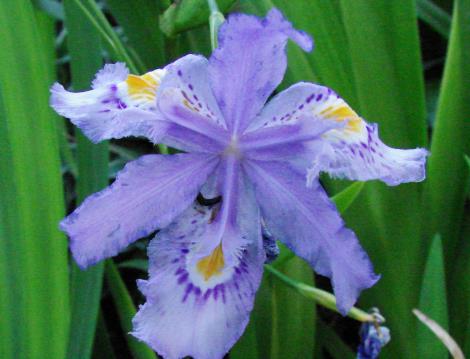
Iris confusa 'Martyn Rix'
IN THE NURSERY
Click here to view all the plants in this newsletter on one website page.
Indigenous plants
The star of this month’s newsletter, Aponogeton distachyos is a summer-dormant aquatic perennial with floating dark green oblong leaves and edible white flowers in winter. Make sure you plant it in full sun and with at least 30cm of water above the plant.
Albuca nelsonii is one of my favourite shade-loving plants. This is a rare grassland bulb with fleshy strap-like leaves and sprays of green-striped white flowers in spring to summer. Evergreen and hardy, it grows about 1m high.
If you can bear to think as far ahead as autumn, the deciduous Clematis brachiata (Traveller’s Joy) has masses of delicate fragrant creamy-white flowers at that time of year. A very hardy and vigorous grower that spreads rapidly, it reaches a height of about 6m. Plant in semi-shade.
Rothmannia globosa is an upright approximately 3m tall semi-hardy evergreen shrub with glossy foliage, fragrant cream bell-shaped flowers and round fruits in spring. Loved by butterflies and bees, it is happiest in semi-shade.
The stunning upright perennial Salvia radula offers panicles of white flowers all season when planted in full sun. Evergreen and hardy, it has attractive aromatic furry grey leaves, and grows on average 75cm high.
Exotic plants
Bletilla striata is a clump-forming deciduous terrestrial orchid with strap-like leaves and sprays of pink/lilac orchid-like flowers in early spring. Growing about 30cm high, it should be kept dry in winter, and can be divided in early spring. Our plants are just starting to push out their first buds.
Eranthemum pulchellum is an interesting shrub with textured veined dark green leaves and spikes of rich blue flowers from winter to spring. Evergreen and hardy, it reaches an average height of 1m and likes semi-shade. Loved by bees and butterflies.
The lovely spring-flowering English Bluebell, Hyacinthoides non-scripta, is a robust deciduous perennial bulb with broad leaves and erect flowering stems with bell-shaped violet-blue flowers, which wants semi-shade. It grows about 60cm high. This is a first for us in the nursery. We previously sold the Spanish Bluebell.
Lychnis coronaria alba is a clump-forming approximately 75cm tall perennial with silver felted leaves and five-petaled white flowers in summer. It is evergreen and very hardy, and is happiest in full sun and dry, sandy soil.
The deciduous ornamental cherry Prunus glandulosa is one of the delights of spring. This is a rounded floriferous shrub with mid-green leaves and lovely bowl-shaped white flowers followed by red berries. It is happy in sun to semi-shade, and reaches an average height of 1.5m.
SNIPPETS
For those who missed Flora Africa’s Impala Lily Fest from 27 to 29 August, they will have open days again from 24 to 26 September.
Wishing all happy gardening over the next few months – the gardeners’ New Year!
FUN FACT
The English bluebell is considered a key botanical sign of woods designated as ancient; i.e., more than 400 years old.
Leoné
082 482 0257